


The Balkans, sometimes known as South-East Europe, stand at the crossroads between Europe, Asia and Africa. A formerly turbulent region, today it is quite peaceful, the question now is how will these countries thrive.
In my eyes, this will be tied to the EU, which can act as an engine to push for a better life for the people. A few Balkan countries have already joined the EU, Slovenia, Romania, Bulgaria and Croatia, but many remain stuck in the process.
Why are they stuck?
The short answer is... it’s complicated. Some countries have disputes with their neighbours, and when their neighbours are already in the EU, it means that they can hold up applications until these disputes are resolved. Others have struggled to make the necessary reforms, and the EU has not been too willing to help.
What has changed?
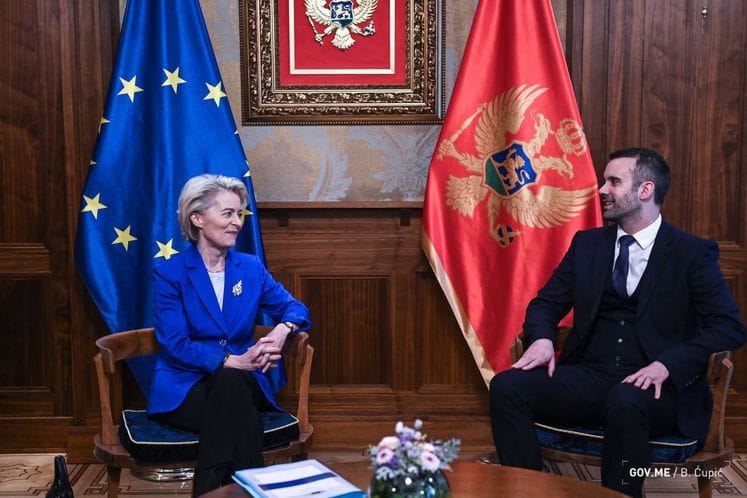
Since the invasion of Ukraine, the EU has sought to welcome new members so as to extend it’s values of democracy and trade. This has allowed certain prospective countries to pick up the pace, like Montenegro for example.
What happens next?
I think there are 3 possible scenarios, the most likely of which is the median scenario, where certain Balkan countries successfully accede. Less likely would be either no one manages, through disputes or lack of reform, or the other extreme every Balkan country manages to accede. I will outline each scenario and what it means for Europe and the Balkans in the next 10 years.

Map: Andrew Galea Roberts
Scenario A: No one accedes, worst case scenario.
Essentially everything remains exactly as it is now. This could happen if the willingness of the EU to expand dries up, or reforms take too long. This is rather unlikely as several countries are still willing to reform, and the EU is still looking for new members.
If it did happen however, it would signal a big failure in the EU’s model, both in terms of how decisions are made, as well as its ideals of democracy and rule of law. It would also be a failure for the countries in the Balkans, who’s people deserve these freedoms and rights that membership of the EU offers.

Map: Andrew Galea Roberts
Scenario B: Certain countries accede, median scenario.
As I mentioned, this is the most likely scenario. Those countries that are more advanced in negotiations, like Montenegro and Albania, successfully accede, while others are still dogged by neighbourly disputes and lack of progress. If the candidates do not see enough benefits being enjoyed by the new members it may hinder further progress. This means that not only is it important that the EU enlarges, but also that it does so successfully. One could argue that certain countries did not feel the benefits of the EU so strongly after the 2004 enlargement, which has led to the rise in Euroscepticism, so we must avoid that fate again and make sure the EU is efficient at integrating and benefiting Europe.

Map: Andrew Galea Roberts
Scenario C: All remaining Balkan countries accede, best case scenario.
Although it is unlikely for the next 10 years, this would be the ideal scenario, helping to boost the EU’s economy with more manpower for services and industry. It could improve the rights and prospects for the 16 million people living there. This can only happen however if the countries agree on settlements for long disagreements, in Kosovo, in Bosnia and in North Macedonia. The EU would also need to reach a more sustainable method for decision making, so that the enlargement would not bring new problems and deceleration. This would be a success for the EU as it would renew the ideals that stand behind it, and show that it is still attractive in todays fraught geopolitical scene.
What’s the bottom line?
The realities of today’s world make the Balkans very important for the EU in its standing in the world. Even though it is geographically small, it serves as a beacon, demonstrating the strength or weakness of the EU and its values. The next 10 years will be crucial in seeing how the EU evolves, either stagnating, expanding or thriving.
-
Andrew Galea Roberts is the Guardian's Balkans correspondent.